
The Blue Origin campaign failed—but not for the reason you think.
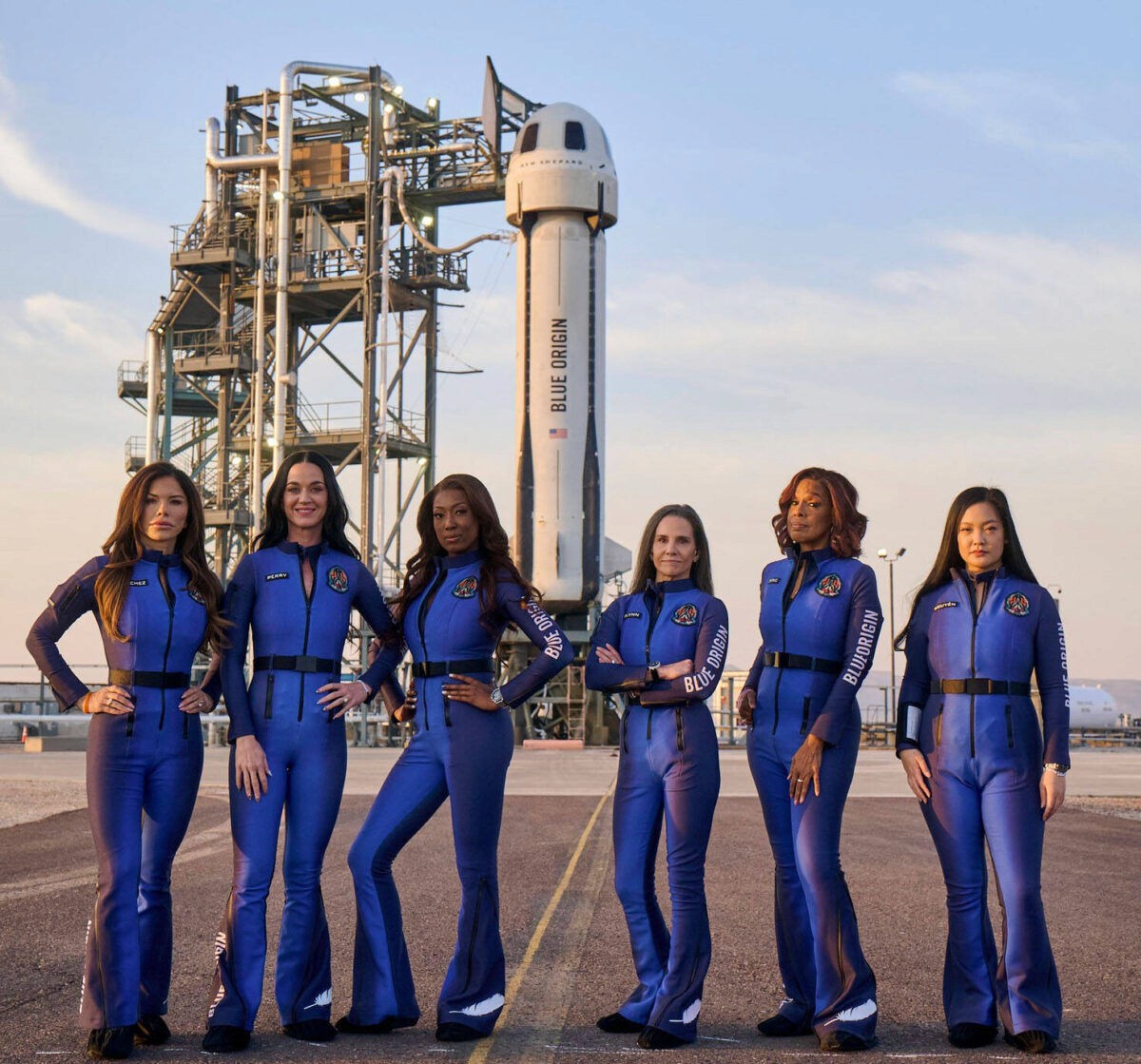

The Blue Origin campaign failed—but not for the reason you think.
Not because the mission was wrong.
Not because celebrities were involved.
Not even because it lacked scientific merit.
It failed because of misaligned messaging
And here’s why it matters.
Blue Origin isn’t NASA.
It’s a luxury space tourism company.
It sells 11-minute suborbital flights to ultra-high-net-worth individuals.
And this flight?
→ A high-end brand activation.
→ A PR campaign with celebrities in custom-designed suits.
→ Press everywhere.
→ Even an appearance by the Kardashians.
Think more Louis Vuitton runway than Apollo 11.
If they had owned that story?
Nobody would’ve blinked.
But they didn’t.
Instead, they layered on words like:
→ “Historic”
→ “All-female mission”
→ “Astronauts”
And those aren’t harmless.
They’re semantic triggers—things like words, images, sounds, reputations, symbols, and even people themselves.
They come preloaded with meaning—and they shape perception instantly.
And in today’s 3-second attention span world, people rely more on those signals than the actual content.
They activate expectations because they come with their own templated backstories.
For example, the word “astronaut” comes bundled with:
→ Risk
→ Rigor
→ Discipline
→ Scientific contribution
→ Humility earned through pressure
Semantic triggers are like movie trailers.
They use sound, visuals, and language to create expectations for what you’re about to experience.
Now imagine you see a trailer with dramatic music, space exploration, history, and astronauts…
But when you watch the movie, you get:
→ Designer clothes
→ Expensive purses
→ Katy Perry’s tour announcement
→ And the Kardashians.
The trailer promised Apollo 13.
What you got was a zero-gravity Vogue cover shoot.
It felt like two different teams ran two different campaigns—for everyone and no one at the same time.
This is exactly how media framing works.
Take the same event—use different semantic triggers, and you create completely opposite realities:
Puff piece:
“Tech Visionary Pledges $10M to Help Underserved Youth Break Into Coding.”
Hit piece:
“Billionaire Donates Pennies of Fortune to Save Face After Layoffs.”
Same $10M donation. Two entirely different stories—because of the words used to tell it:
→ Visionary vs Billionaire
→ Pledges vs Donates
→ $10M vs Pennies of Fortune
→ To Help Youth vs to Save Face
→ Underserved vs After Layoffs
You see it on LinkedIn all the time, too:
“Excited to announce I’ve been selected as one of 15 rising voices invited to join this year’s Global Innovation Panel, hosted by FutureLeaders360 and backed by the World Tech Foundation.”
Translation:
I filled out a Typeform on the internet and was added to a non-exclusive list of contributors for a virtual roundtable that anyone could apply to… but it sounds like I’m shaping global policy.
Why it feels meaningful—but isn’t:
“Selected” → sounds competitive.
“Rising voices” → triggers youth, influence.
“Global Innovation Panel” → sounds official
“Backed by [Impressive Organization]” → creates social proof
Used honestly?
Semantic triggers create instant clarity and resonance.
Used carelessly?
They trigger mistrust, cynicism, and backlash.
They communicate the ending of a story—
But if there’s no believable story arc, we feel lied to.
Our BS meters spike.
And we start seeing the brand like a used car salesman—polishing a lemon with prestige language.
Because here’s the truth about semantic triggers:
They’re not just decorative.
They’re strategic.
And they only work when they match the character behind them.
Unless the figure embodies or complements the trigger, it backfires.
They work best with unknowns or blank slates—people whose stories are still unfolding.
But celebrities?
They come with preloaded backstories of their own.
They are semantic triggers.
This is exactly why PR companies use celebrities in the first place—
Because just their presence tells a story and shapes a narrative.
But that only works when the story matches the symbols.
The word “astronaut” works when there’s a journey.
A test. A transformation.
A timeline that justifies the title.
But these women weren’t introduced with earned narrative arcs.
They weren’t engineers. They weren’t scientists.
Their only backstory was: celebrity, influence, affluence.
So when you use a trigger that evokes sacrifice and service—
and pair it with a backstory rooted in privilege and visibility—
It doesn’t just fall flat.
It feels fraudulent.
So what could they have done?
If it was meant for the affluent:
→ Drop the “historic” narrative.
→ Sell exclusivity: “Experience what only 0.0001% of humans ever will.”
→ Frame it as a once-in-a-lifetime moment for women of influence.
→ Let the experience—not the optics—do the talking.
If it was meant for STEM and the public:
→ Involve actual women in aerospace—engineers, mission designers, scientists.
→ Tie the launch to real research, experiments, or education.
→ Fund scholarships or fellowships.
→ Use the spotlight to open doors for others.
All of this could’ve been avoided.
Two clear positioning paths.
Two strategic narratives.
And they chose none.
Marketing isn’t about being loud.
It’s about being aligned—with your offer, your audience, and your message.
Miss that—and your brand becomes a meme, not a movement.
And no amount of PR spin can fix a brand that feels dishonest.


